NFC-based Auth.
Xentag pairs NFC chips with a mobile app to help consumers verify the authenticity, warranty, and ownership history of physical products — primarily luxury goods. This project focused on reducing drop-off in the core authentication flow and making the app worth returning to after the first scan.
Client

Year
2019
Industry
IoT / Smart Packaging
Role
Product Designer
Challenge
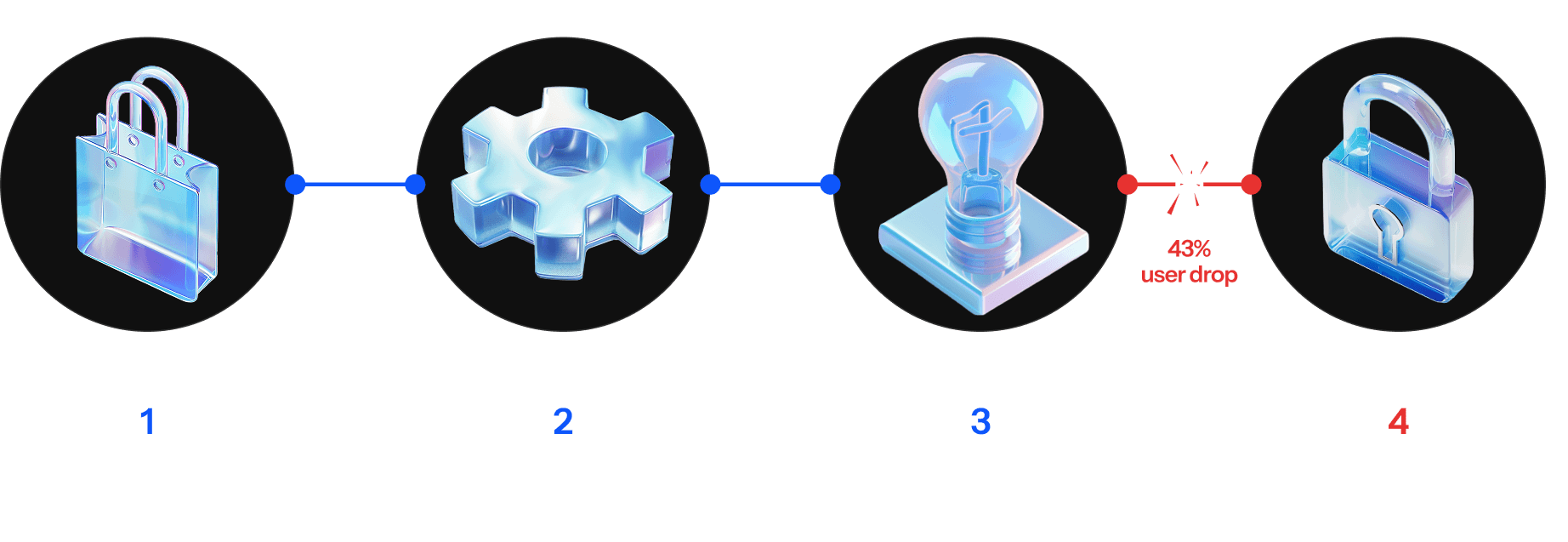
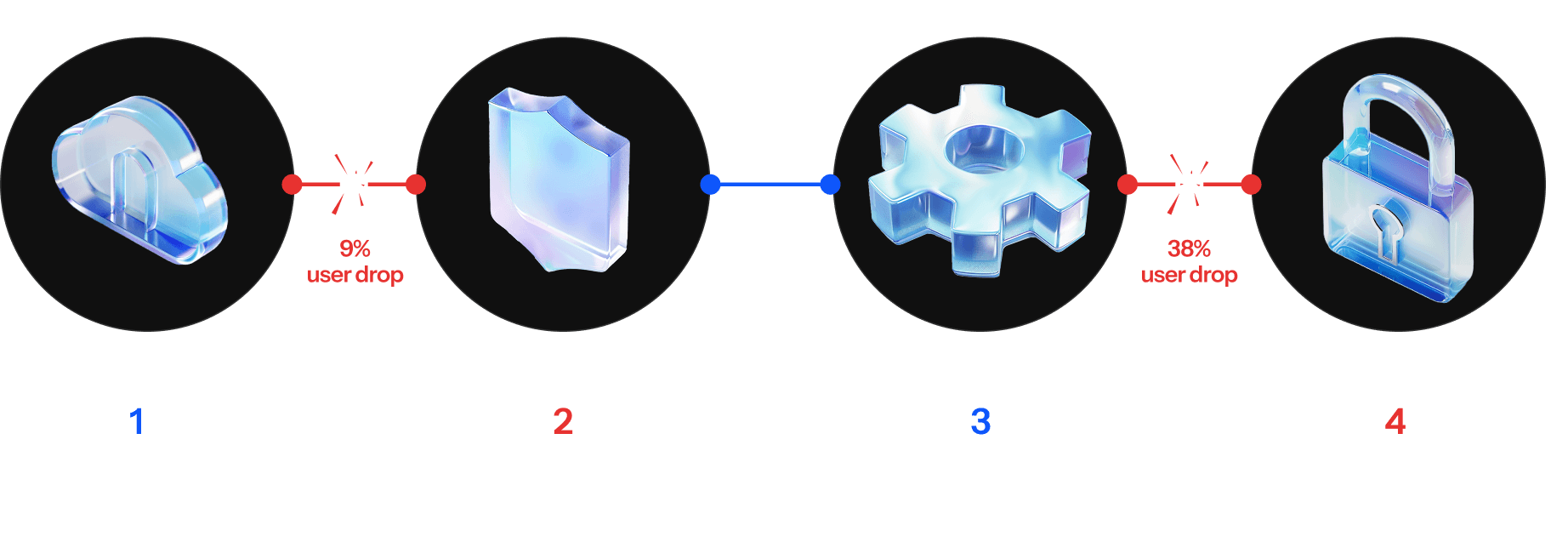
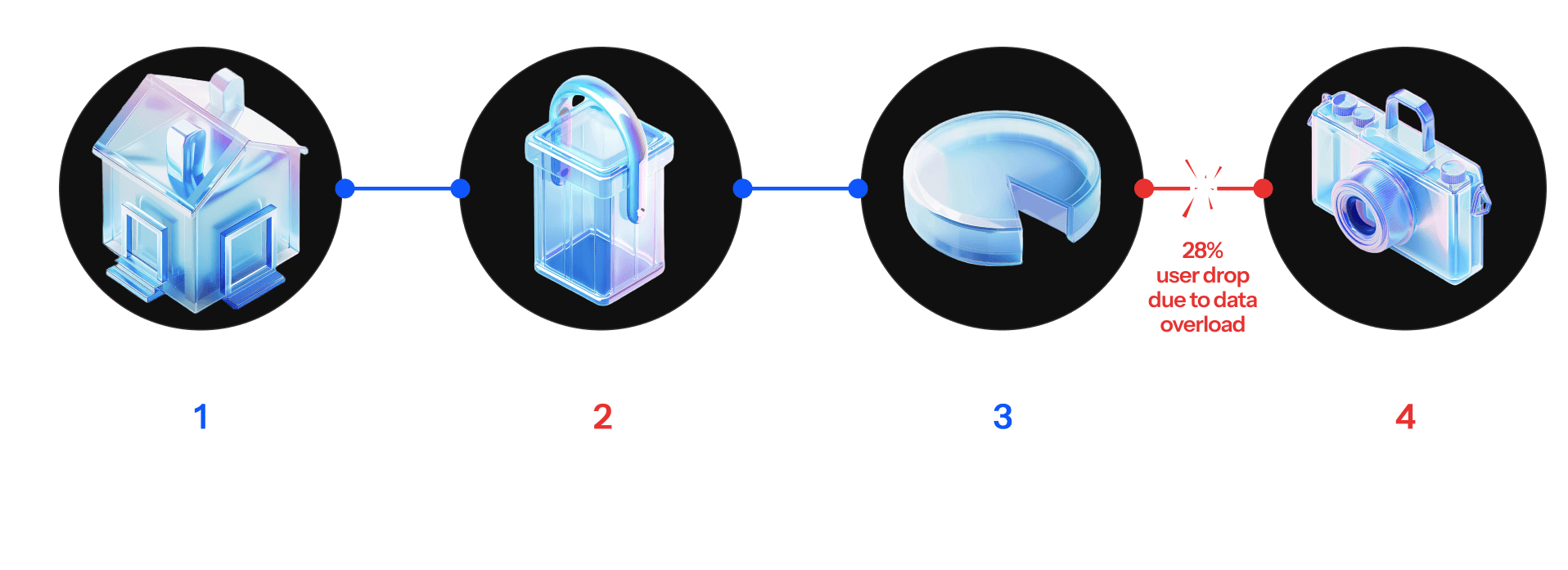
The existing product had a fundamental conversion problem: users would scan a product, hit a mandatory app download and sign-up wall, and leave. Those who made it through onboarding faced a lengthy data collection form before they could complete their primary goal — verifying authenticity. And the notification screen had become so cluttered with mixed-priority content that users ignored it entirely. Three separate problems, each eroding the product's core value proposition.
approach
Ran quantitative research across academic sources and industry reports to size the counterfeit goods problem and identify which sectors were most affected
Conducted 39 empathy interviews with consumers to surface real attitudes toward app downloads, data trust, and what would actually make Xentag useful beyond a one-time scan
Mapped the full customer and business-owner journey separately to understand where the two personas diverged — and scoped the first phase of work to the customer flow only
Ran weekly internal usability tests for 12 weeks during ideation and prototyping, then followed up with external A/B testing through Firebase with beta users
key decisions
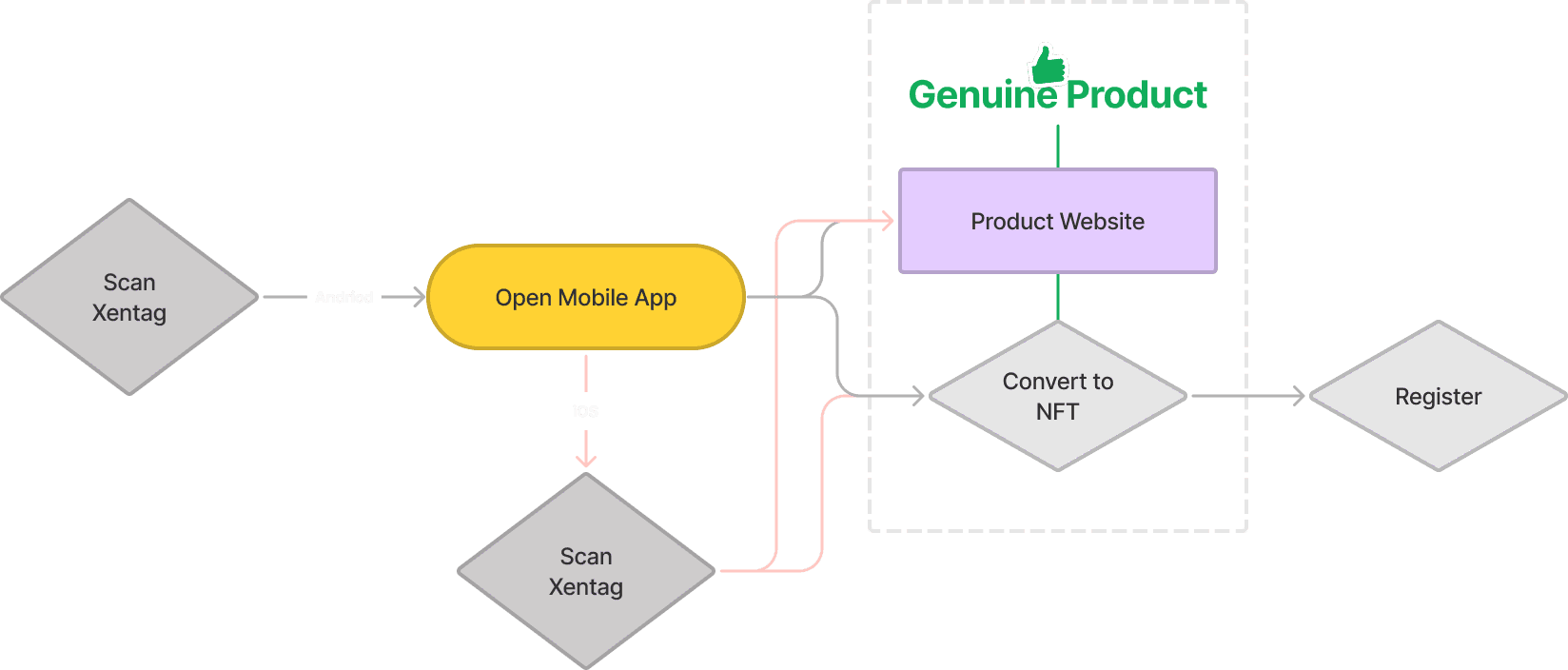
App download as a gate: 78% of interview participants said being forced to download an app to verify a physical product felt inconvenient. Rather than accept this as a given, I proposed a web-based fallback — a limited-scope browser experience that let users complete one-time verification without downloading, with a soft nudge toward the app after. Removing the hard gate was the single highest-impact change to top-of-funnel drop-off.
Drip-wise data collection: The onboarding form — email, 2FA, personal info, location — sat between sign-up and the user's actual goal. I moved data collection to after first successful product verification. The sequence now matches the user's motivation: let them succeed first, ask for more later.
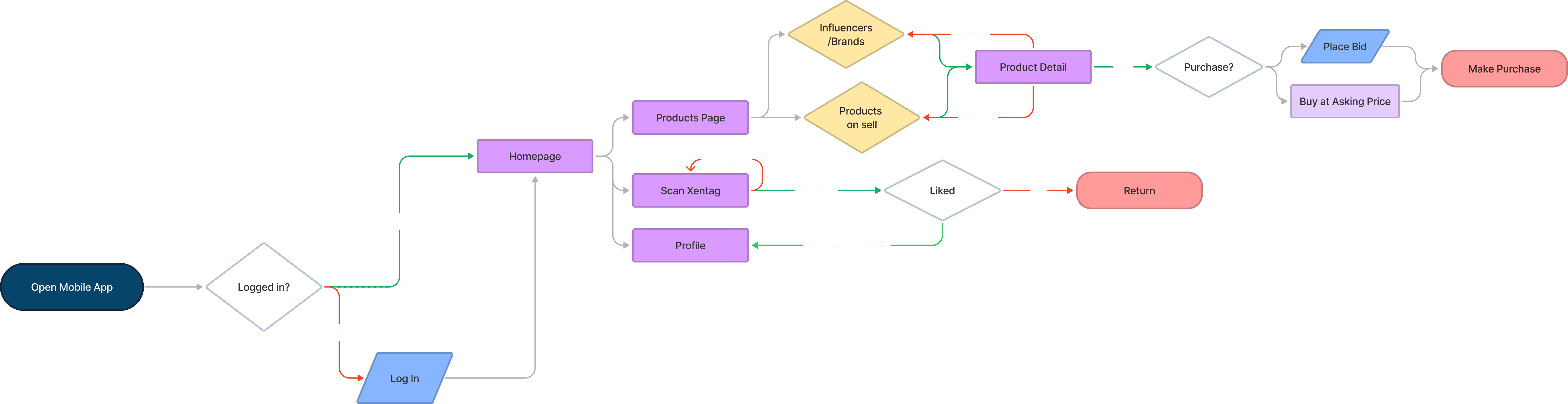
Notification triage: The notification screen was trying to carry warranty alerts, product trivia, promotional content, and similar-item suggestions all at once. I separated action-required notifications from ambient content — the former stayed in notifications, the latter moved into a redesigned home screen organised around the user's registered products.
deliverables
Design system — component library and visual language maintained across iOS, Android, and web
Persona documents — two distinct personas scoped to the customer and business-owner journeys
Journey maps — separate end-to-end maps for the customer and product manager flows, from onboarding to post-authentication
Affinity maps — FigJam boards used to cluster research findings and frame problem statements
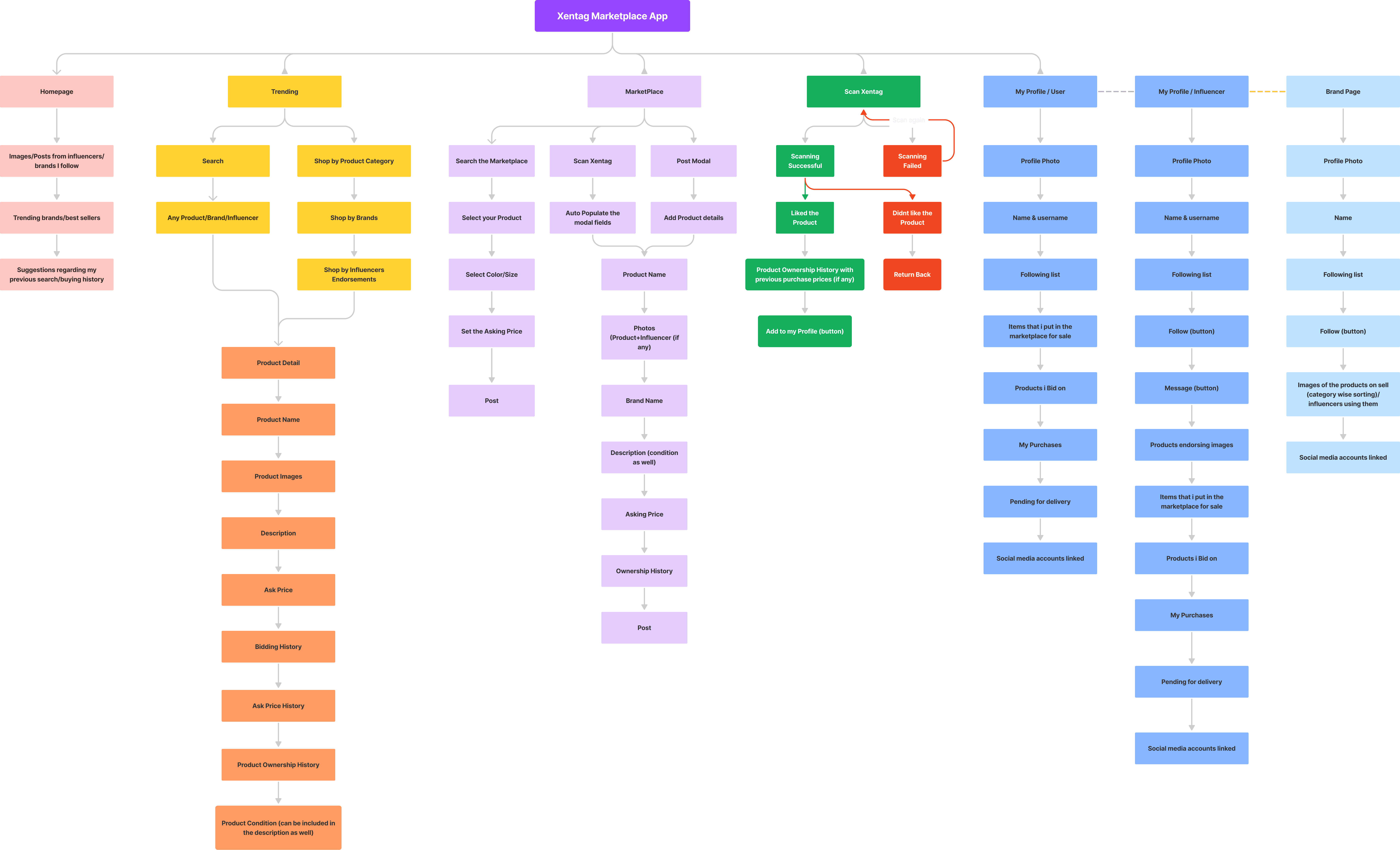
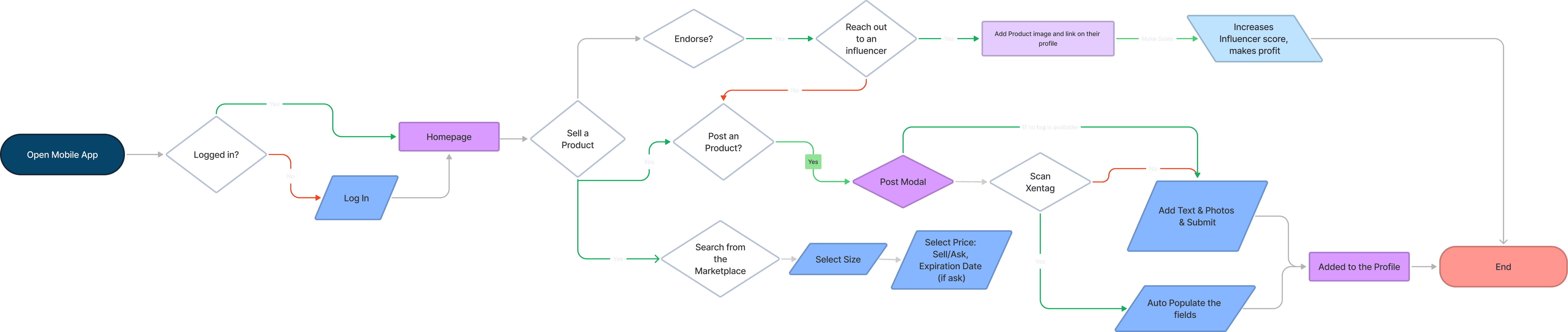
User flow diagrams — full flow coverage including the primary authentication path, onboarding, and notification interactions
Low-fidelity wireframes — early-stage screens to pressure-test structural decisions before visual execution
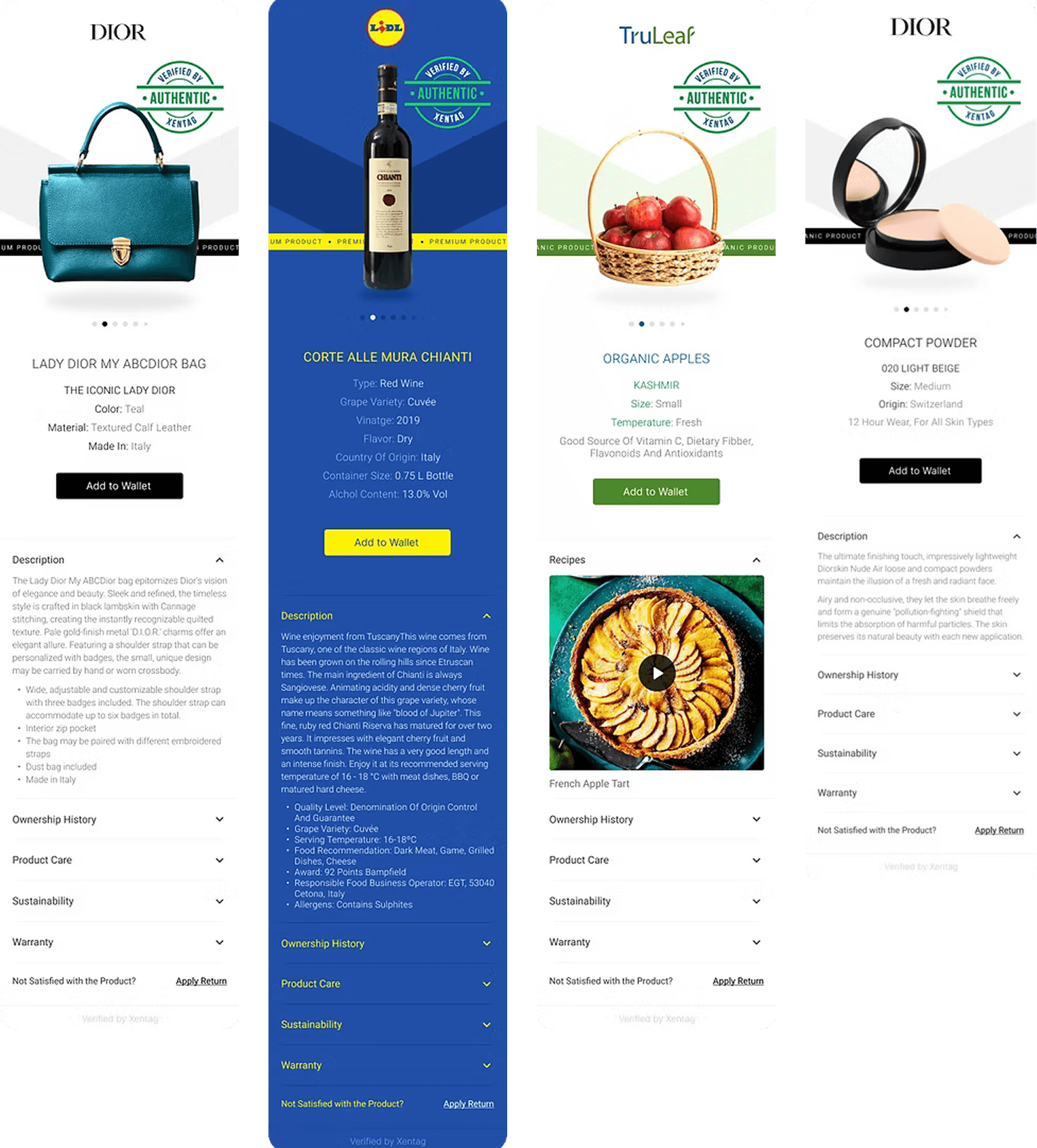
High-fidelity prototypes — interactive prototypes used for internal testing and stakeholder reviews
Firebase A/B test setup — configured and monitored experiment structure for external beta testing across key flow variants
impact
Xentag's revenue grew 8% within two years
iOS and Android apps received marketplace features under Productivity and Editor's Picks
Agency partner count increased and client base expanded across new industries beyond luxury goods
reflections
The drip-wise data collection change felt obviously right from a user perspective, but it created a real tension with the business's need for complete user profiles early. I'd want to track how many users who skipped the onboarding form ever completed their profile downstream — and whether incomplete profiles meaningfully impacted retention or campaign targeting. The conversion win at the top of the funnel might have a cost further down that we didn't fully measure.
More work
2020 - 2026
More of my work across SaaS, AI, and startups.